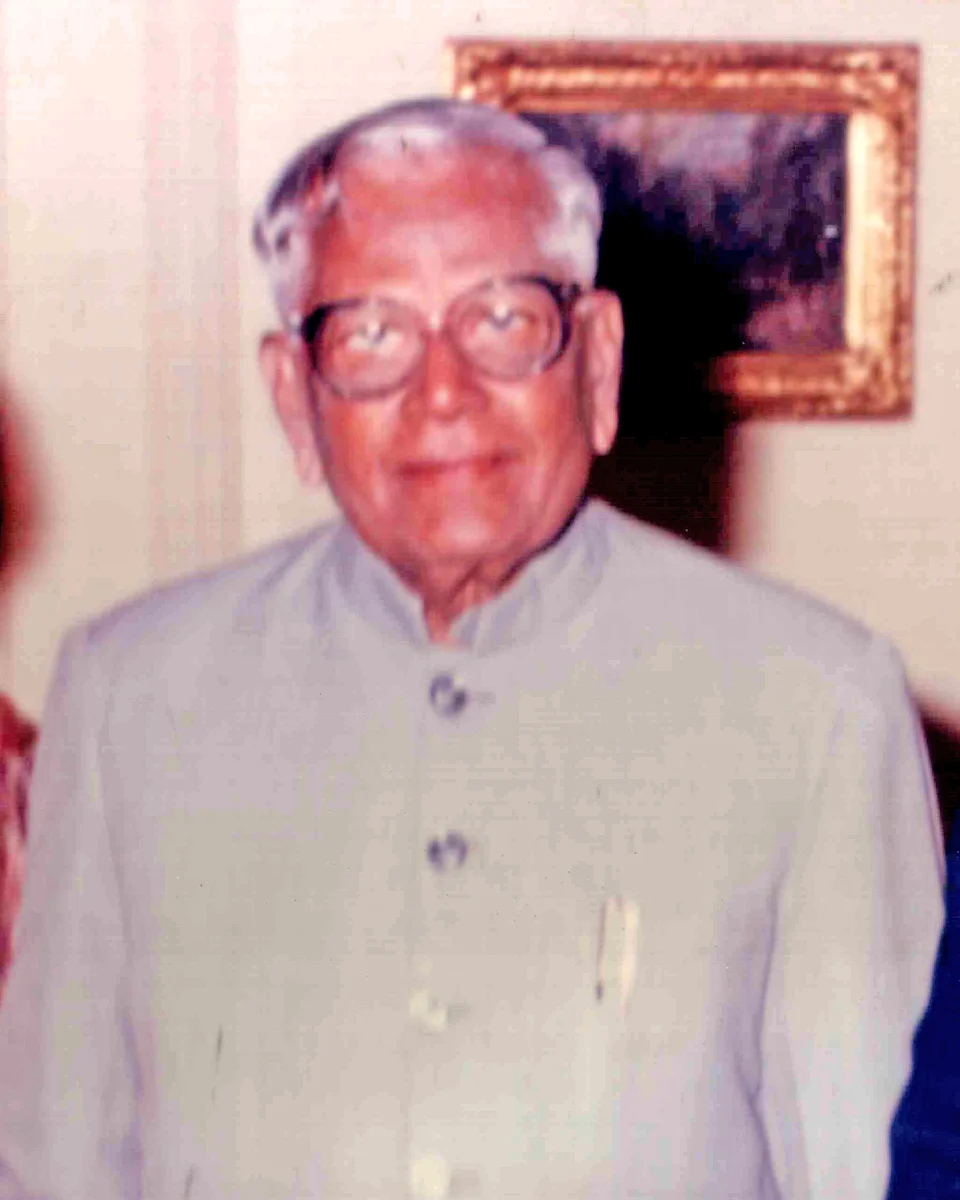
R. Venkataraman
- Date of birth
- 4 December 1910
- Place of birth
- Rajamadam, Tamil Nadu, India
Updated

Ramaswamy Venkataraman was born on 4 December 1910 at Rajamadam, in the Madras Presidency and now in Tamil Nadu. The Vice-President’s Secretariat names his father as K. Ramaswami Iyer and his wife as Janaki Venkataraman. He studied economics at Loyola College, Madras, and law at the Law College, Madras, and holds M.A. and B.L. degrees. He began practice in the Madras High Court in 1935. He also received honorary doctorates from the Universities of Madras, Nagarjuna and Burdwan and a doctorate in social sciences from the University of Roorkee.
Venkataraman took part in the Quit India Movement of 1942. The President’s Secretariat records that he was detained for two years, and Britannica gives the years 1942 to 1944. He was a member of the Provisional Parliament from 1950 to 1952 and of the Lok Sabha from 1952 to 1957, and chaired the Lok Sabha Public Accounts Committee.
In 1957 Venkataraman left the Lok Sabha to join the Madras government at the request of Chief Minister K. Kamaraj, according to Britannica. He was a member of the Madras Legislative Council from 1957 to 1967 and its Leader of the House. From 1957 to 1967 he held the industries, labour, cooperation, power and transport portfolios in the state government. He was a member of the Planning Commission from 1967 to 1971, and a member of the United Nations Administrative Tribunal from 1955 to 1979 and its president from 1968 to 1979.
Venkataraman returned to the Lok Sabha in 1977 and again in 1980, and sat until 1984. In Indira Gandhi’s government he held the finance and defence portfolios between 1980 and 1984; Britannica gives finance and industry for 1980 to 1982 and defence for 1982 to 1984. He was elected Vice-President of India and was ex-officio Chairman of the Rajya Sabha from 31 August 1984 to 24 July 1987. He was also president of the Indian Institute of Public Administration.
Venkataraman served as President from 25 July 1987 to 25 July 1992. Britannica records that he worked with four prime ministers during his term: Rajiv Gandhi, V. P. Singh, Chandra Shekhar and P. V. Narasimha Rao. He died in New Delhi on 27 January 2009.
| Period | Position | Organisation | Region |
|---|---|---|---|
| 25 July 1987 – 25 July 1992 | President of India | Government of India | India |
| 31 August 1984 – 24 July 1987 | Vice-President of India and Chairman of the Rajya Sabha | Government of India | India |
| — | Union Minister of Defence | Government of India | India |
| — | Union Minister of Finance | Government of India | India |
| — | Member of Parliament, Lok Sabha | Lok Sabha | — |
| — | Minister of Industries, Labour, Cooperation, Power and Transport, Madras | Government of Madras | Madras |
| — | Member, Madras Legislative Council | Madras Legislative Council | Madras |
| — | Member, Planning Commission | Government of India | India |
| — | President, United Nations Administrative Tribunal | United Nations | — |
- Tamra PatraRecorded for participation in the freedom struggle.
- Sat Seva RatnaTitle conferred by the Sankaracharya of Kanchi Kamakoti Peetham.
- United Nations souvenirPresented by the UN Secretary-General for distinguished service as President of the Administrative Tribunal.
- Honorary doctoratesHonorary doctorates of laws from the Universities of Madras, Nagarjuna and Burdwan; doctorate of social sciences from the University of Roorkee.