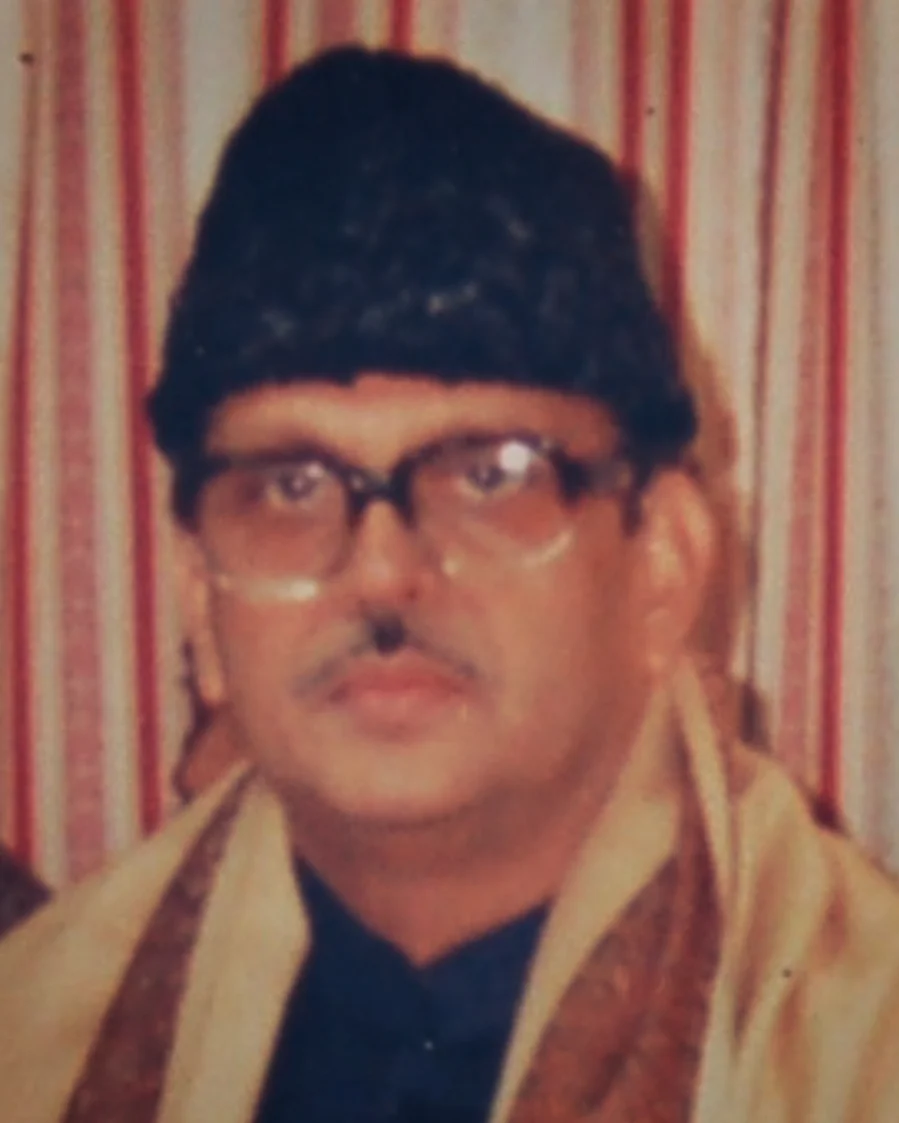
V. P. Singh
- Date of birth
- 25 June 1931
- Place of birth
- Allahabad, Uttar Pradesh, India
Updated

Vishwanath Pratap Singh was born on 25 June 1931 at Allahabad, the son of Raja Bahadur Ram Gopal Singh. He was educated at Allahabad and Poona Universities and holds B.A., B.Sc. and LL.B. degrees according to his Lok Sabha profile. He was President of the Students Union at Udai Pratap College, Varanasi, in 1947-48 and Vice-President of the Allahabad University Students Union. He founded Gopal Vidyalaya Intermediate College at Koraon, took part in the Bhoodan movement in 1957 and donated a farm in village Pasna in Allahabad district. He married Sita Kumari on 25 June 1955, and they had two sons.
Singh was a member of the Uttar Pradesh Legislative Assembly from 1969 to 1971 and Whip of the Congress Legislative Party in 1970-71. He was elected to the Lok Sabha in 1971, served as Union Deputy Minister of Commerce from October 1974 and Minister of State for Commerce from November 1976 to March 1977, and was re-elected to the Lok Sabha in January 1980. He was Chief Minister of Uttar Pradesh from 9 June 1980 to 28 June 1982. In 1983 he returned to the Union government as Minister of Commerce, with additional charge of Supply, and entered the Rajya Sabha in July 1983.
Singh was elected President of the Uttar Pradesh Congress Committee in September 1984 and became Union Finance Minister on 31 December 1984 in the Cabinet of Rajiv Gandhi. His Lok Sabha profile records that he held Finance until January 1987 and then served as Defence Minister until April 1987. He founded the Jan Morcha in October 1987, returned to the Lok Sabha in June 1988, became Convenor of the National Front in August 1988 and was elected President of the Janata Dal in October 1988. He was elected to the Lok Sabha in the ninth general election in November 1989.
Singh was sworn in as Prime Minister on 2 December 1989 at the head of the National Front government, which depended on outside support from the Left parties and the Bharatiya Janata Party. On 7 August 1990 he told the Lok Sabha that the government would implement part of the Mandal Commission’s report on reservations for socially and educationally backward classes in central government jobs, and an Office Memorandum followed on 13 August. The announcement led to protests and to court challenges, and the Supreme Court upheld the Memorandum in 1992. Frontline reports that his government fell after the BJP withdrew its support, and his term ended on 10 November 1990.
Singh was elected to the Lok Sabha again in 1991, representing Fatehpur. His Lok Sabha profile lists painting and photography among his interests. He had suffered from cancer and renal failure for about a decade before he died at the Indraprastha Apollo Hospital in New Delhi on 27 November 2008, aged 77. The Union government announced seven days of state mourning.
| Period | Position | Organisation | Region |
|---|---|---|---|
| 2 December 1989 – 10 November 1990 | Prime Minister of India | Government of India | India |
| 9 June 1980 – 28 June 1982 | Chief Minister of Uttar Pradesh | Government of Uttar Pradesh | Uttar Pradesh |
| 31 December 1984 | Minister of Finance | Government of India | India |
| — | Minister of Defence | Government of India | India |
| 29 January 1983 | Minister of Commerce | Government of India | India |
| — | President of the Janata Dal | Janata Dal | — |
| — | Member of Parliament, Lok Sabha | Lok Sabha | Fatehpur |
| 16 July 1983 | Member of Parliament, Rajya Sabha | Rajya Sabha | Uttar Pradesh |
| Year | Election | Constituency | Party | Result | Votes received | Margin |
|---|---|---|---|---|---|---|
| 1991 | Lok Sabha | Fatehpur | Janata Dal | won | — | — |
- 1990Announcement on the Mandal Commission reportAnnounced to the Lok Sabha on 7 August 1990 that part of the report would be implemented.