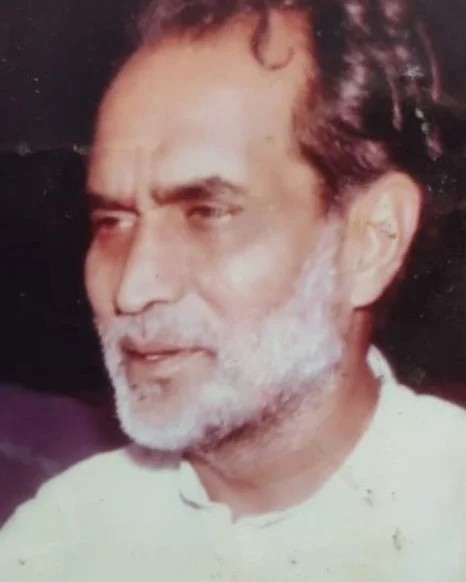
Chandra Shekhar
- Date of birth
- 17 April 1927
- Place of birth
- Ibrahimpatti, Ballia district, Uttar Pradesh, India
Updated

Chandra Shekhar was born on 17 April 1927 in a farmer’s family in the village of Ibrahimpatti in Ballia district, Uttar Pradesh. He took a Master’s degree in Political Science at Allahabad University in 1950-51 and joined the socialist movement, working closely with Acharya Narendra Dev. He became Secretary of the Praja Socialist Party in Ballia, then Joint Secretary of the party’s Uttar Pradesh unit, and was its General Secretary in the state in 1955-56. He married Duja Devi, and they had two sons, Pankaj and Neeraj.
Chandra Shekhar was elected to the Rajya Sabha from Uttar Pradesh in 1962. He joined the Indian National Congress in January 1965 and in 1967 was elected General Secretary of the Congress Parliamentary Party. Frontline describes him as part of a socialist group within the Congress, with Mohan Dharia and Krishan Kant, known as the Young Turks. In 1969 he founded and edited the weekly Young Indian from Delhi. Drawn towards Jayaprakash Narayan during the turbulent years of 1973-75, he became a focus of dissent within the party.
Chandra Shekhar was arrested under the Maintenance of Internal Security Act when the Emergency was declared on 25 June 1975, although he was a member of the Congress Central Election Committee and Working Committee. His prison diary was later published in Hindi as Meri Jail Diary, and he also wrote Dynamics of Social Change. He was President of the Janata Party from 1977 to 1988. From 6 January to 25 June 1983 he walked about 4,260 kilometres from Kanyakumari to Rajghat in Delhi, and afterwards set up about fifteen Bharat Yatra Centres across several states.
Chandra Shekhar was a Member of Parliament from 1962 except for the period from 1984 to 1989. In 1989 he won both Ballia and Maharajganj in Bihar, vacating the latter. Frontline reports that after the V. P. Singh government fell he left the Janata Dal with 64 Lok Sabha members, formed the Samajwadi Janata Party and became Prime Minister with Congress support. He held office from 10 November 1990 to 21 June 1991 according to the Prime Minister’s Office, which lists his party as the Janata Dal (S). Frontline also credits his government with being the first to open a dialogue with Punjab militants.
Chandra Shekhar received the inaugural Outstanding Parliamentarian Award in 1995, according to Frontline, and was returned to the Lok Sabha from Ballia in the last two general elections before his death. He died on 8 July 2007 at the Apollo Hospital in New Delhi, aged 80, after a prolonged illness with multiple myeloma. The Union government declared seven days of state mourning and announced a state funeral.
| Period | Position | Organisation | Region |
|---|---|---|---|
| 10 November 1990 – 21 June 1991 | Prime Minister of India | Government of India | India |
| — | President of the Janata Party | Janata Party | — |
| — | Member of Parliament, Rajya Sabha | Rajya Sabha | Uttar Pradesh |
| — | Member of Parliament, Lok Sabha | Lok Sabha | Ballia |
| — | General Secretary, Congress Parliamentary Party | Indian National Congress | — |
| Year | Election | Constituency | Party | Result | Votes received | Margin |
|---|---|---|---|---|---|---|
| 1989 | Lok Sabha | Ballia | Janata Dal | won | — | — |
- 1995Outstanding Parliamentarian AwardReceived the inaugural award, according to Frontline.
- 1983Bharat YatraWalked about 4,260 kilometres from Kanyakumari to Rajghat between 6 January and 25 June 1983.