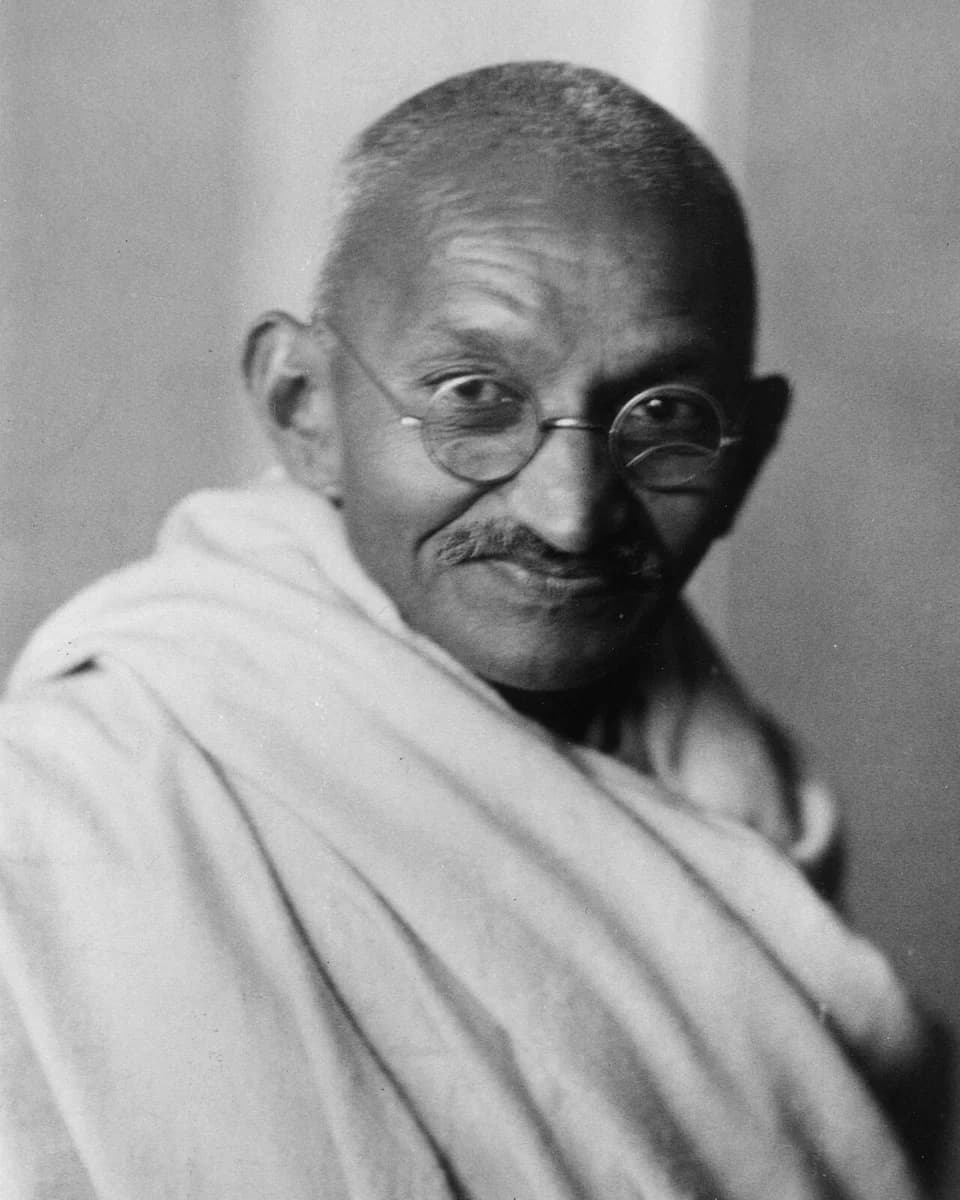

Mahatma Gandhi
Updated
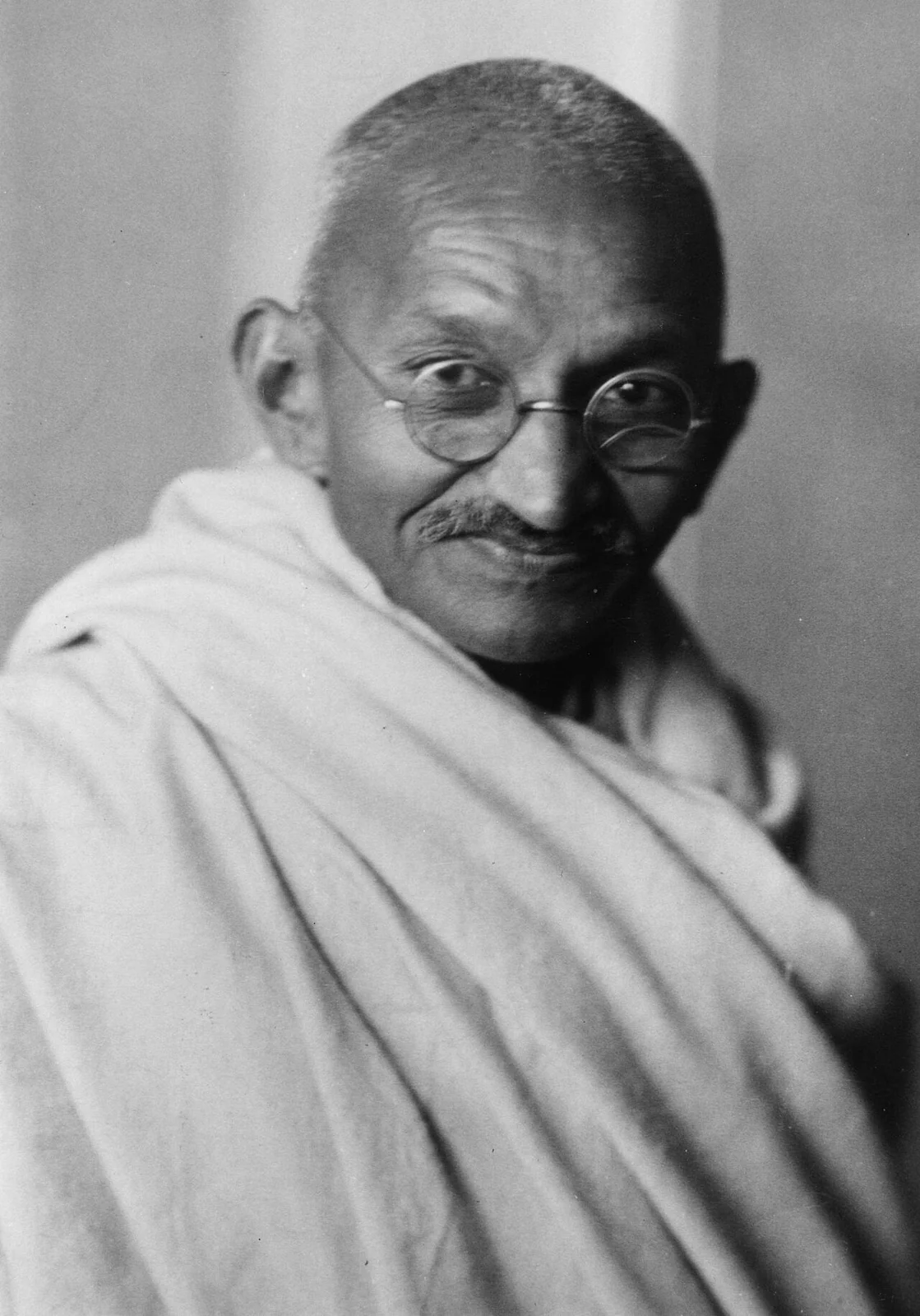
Mohandas Karamchand Gandhi was born at Porbandar to Karamchand and Putlibai Gandhi. His family moved to Rajkot, where he attended school, and he married Kasturba in 1883. After schooling in western India, he studied law in London and qualified as a barrister. He subsequently practised in Bombay and Rajkot before an appointment with an Indian firm took him to South Africa.
Gandhi went to South Africa in 1893 to undertake legal work. Encounters with racial discrimination drew him into organising the Indian community there, including the Natal Indian Congress. He developed campaigns of satyagraha against discriminatory legislation and established institutions including Indian Opinion and Tolstoy Farm. These activities connected legal advocacy, community organisation and non-violent resistance before his permanent return to India in 1915.
In India, Gandhi became a leading figure in Congress and promoted the use of Indian-made goods through swadeshi. The Salt March of 1930 challenged the British monopoly on salt and became a major campaign of civil disobedience. He also participated in negotiations with colonial authorities. His approach treated the methods of political action as central to the independence movement, with non-violence a guiding principle.
In the years surrounding Partition and independence, Gandhi travelled and fasted in efforts to reduce communal violence, including in Bengal, Bihar and Delhi. Nathuram Godse assassinated him at Birla House in Delhi on 30 January 1948. The United Nations established the International Day of Non-Violence in 2007, choosing his birthday, 2 October, for an annual observance focused on education, public awareness and the rejection of violence.
| Period | Position | Organisation | Region |
|---|---|---|---|
| — | President of the Indian National Congress | Indian National Congress | — |
| — | Organiser of the Natal Indian Congress | Natal Indian Congress | South Africa |
- 1930Salt MarchLed civil disobedience against the colonial salt monopoly.
- 2007International Day of Non-ViolenceThe United Nations designated his birthday as the annual observance.