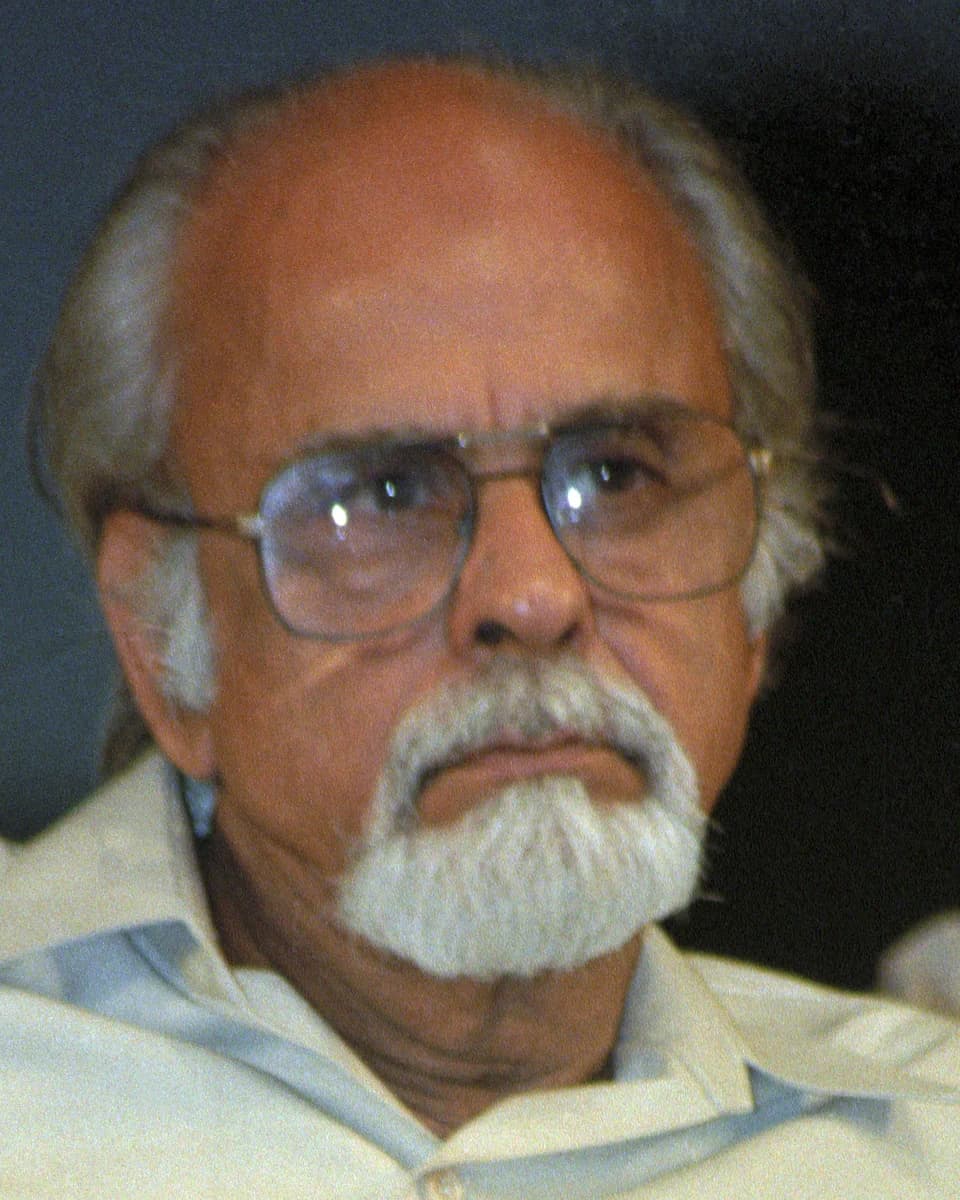
I. K. Gujral
- Date of birth
- 4 December 1919
- Place of birth
- Jhelum, undivided Punjab (now in Pakistan)
Updated

Inder Kumar Gujral was born at Jhelum in undivided Punjab on 4 December 1919, the son of Avtar Narain Gujral and Pushpa Gujral. His parents took part in the freedom struggle. He studied at DAV College, Hailey College of Commerce and Forman Christian College in Lahore, and the Prime Minister’s Office lists his degrees as M.A., B.Com. and Ph.D., with honorary D.Litt. degrees. He married Shiela Gujral on 26 May 1945.
According to the Prime Minister’s Office, Gujral took part in the freedom struggle at the age of eleven in 1931 and was arrested for organising children in Jhelum. He was jailed during the Quit India Movement in 1942. He was president of the Lahore Students Union and general secretary of the Punjab Students Federation. After Independence he was vice-president of the New Delhi Municipal Committee from 1959 to 1964.
Gujral entered the Rajya Sabha in 1964 and was a member until 1976. Between 1967 and 1976 he held the Union portfolios of Communications and Parliamentary Affairs, Information and Broadcasting, Works and Housing, and Planning. From 1976 to 1980 he was India’s Ambassador to the Soviet Union with Cabinet rank. He later joined the Janata Dal and was a member of Parliament from 1989 to 1991. He was Minister of External Affairs in 1989–90, was elected to the Rajya Sabha from Bihar in 1992, and chaired the parliamentary standing committee on commerce and textiles from 1993 to April 1996.
Gujral was External Affairs Minister again from 1 June 1996 with additional charge of Water Resources from 28 June 1996, and was Leader of the House in the Rajya Sabha. He was sworn in as the 12th Prime Minister on 21 April 1997, leading a coalition government supported by the Congress from outside, and served until 19 March 1998. His approach to relations with India’s smaller neighbours, based on accommodation without reciprocity, became known as the Gujral Doctrine. The government ended when the Congress withdrew its support, and mid-term elections followed.
Gujral was elected to the Lok Sabha from Jalandhar in 1998 as an independent. He chaired the official committee for the promotion of Urdu, known as the Gujral Committee, and wrote on national and international affairs and on theatre. He died at a hospital in Gurgaon on 30 November 2012, aged 92, after a lung infection. The government declared seven days of state mourning, and he was given a state funeral in New Delhi.
| Period | Position | Organisation | Region |
|---|---|---|---|
| 21 April 1997 – 19 March 1998 | Prime Minister of India | Government of India | India |
| 1 June 1996 | Minister of External Affairs | Government of India | India |
| 28 June 1996 | Minister of Water Resources | Government of India | India |
| — | Minister of External Affairs | Government of India | India |
| — | Ambassador of India to the Soviet Union | Government of India | Soviet Union |
| — | Leader of the House, Rajya Sabha | Rajya Sabha | — |
| — | Minister of Information and Broadcasting | Government of India | India |
| — | Minister of Planning | Government of India | India |
| Year | Election | Constituency | Party | Result | Votes received | Margin |
|---|---|---|---|---|---|---|
| 1998 | Lok Sabha | Jalandhar | Independent | won | — | — |
- 1997Gujral DoctrineForeign policy approach of accommodation toward India’s neighbours.
- 199712th Prime Minister of IndiaSworn in on 21 April 1997.